




 Click it and Unblock the Notifications


Latest Updates
-
 Happy Birthday Rashmika Mandanna: Steal Her White Looks For Easter 2026 Festive Parties And Celebrations
 -
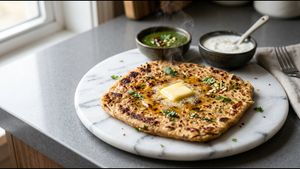 Paneer Paratha Recipe: Crispy Outside, Soft Inside Perfection
 -
 Horoscope for Today April 05, 2026 - Small Choices Guide Calm Momentum
 -
 Happy Easter 2026 Wishes: Top 50+ Messages, Status, Captions And Posts To Share With Family And Friends
 -
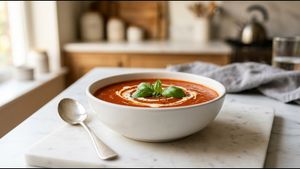 Comfort Style Creamy Blend Tomato Soup Recipe
 -
 Rashmika Mandanna’s “Now It’s Us Three” Post Sparks Speculation Ahead of Anime Awards 2026 Return
 -
 The Softest Ever Homemade Gulab Jamun Recipe
 -
 Where To Eat This Easter 2026: From Chef-Led Experiences To Traditional Feasts Across India
 -
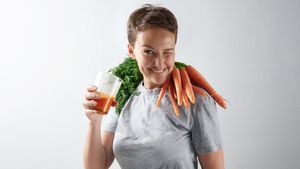 International Carrot Day 2026: The Hydrating, Skin-Loving Vegetable To Eat More This Summer
 -
 Fluffy Jeera Rice Every Time: The Simple Trick You Need To Know


Distinguish Between True And False In Daily Lives


When one faces a situation, the decision to judge whether a statement is true involves memory. On the other hand, determining whether one is false relies on reasoning and problem-solving processes. It proves that true and false sentences on brain activity.
True statements involved the left inferior parietal cortex and the caudate nucleus bilaterally. The former activation may be hypothesized to reflect continued thematic semantic analysis and a more extended memory search. The caudate activation may also reflect this search and matching processes as well as the fact that recognizing a sentence as true is in itself a positive reward for the subject, as this area is also involved in processing reward-related information.
When the differences between truth and falsehoods are clear-cut, people behave like relativists, and use similar processes to arrive at a decision. However, when differences are subtler, people adhere to a categorical distinction and use qualitatively different processes to decide what is true from false. A team of Portuguese and Italian researchers from the Universities of Lisbon and Vita-Salute, Milan, has conducted this study.
Disclaimer: The information provided in this article is for general informational and educational purposes only and is not intended as a substitute for professional medical advice, diagnosis, or treatment. Always seek the advice of your physician or a qualified healthcare provider with any questions you may have regarding a medical condition.


 Continue with Google