




 Click it and Unblock the Notifications


Latest Updates
-
 Why Women Leaders Are Crucial for Driving Change in India’s Healthcare Sector
 -
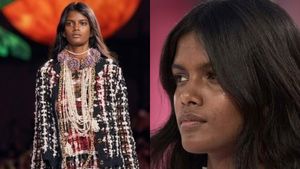 Who Is Bhoomika Yadav? Meet Raipur’s 19-Year-Old, Youngest Indian Model To Walk For Chanel
 -
 Super Crispy Street Style Aloo Tikki Recipe: Your New Favorite Snack!
 -
 Baisakhi 2026: Date, History, Rituals and Cultural Significance Explained
 -
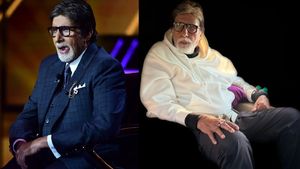 At 83, Amitabh Bachchan Finds Not Working Each Day Disturbing: Why Breaking Routine Triggers Anxiety
 -
 Alia Bhatt Serves Sharp, Subtle Drama in Gaurav Gupta’s Black Three-Piece Tuxedo
 -
 Boss Lady By Zlaata: Workwear That Made Confidence Visible
 -
 These 6 Seemingly Harmless Lifestyle Habits May Be Increasing Your Colorectal Cancer Risk
 -
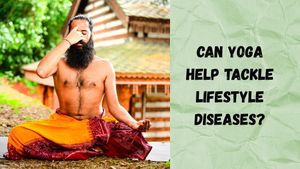 World Health Day 2026: Grand Master Akshar Explains How Yoga Can Help Manage Diabetes and Hypertension
 -
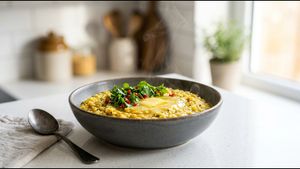 Dal Khichdi Recipe: A Light Comfort Meal Everyone Loves


Gandhi Jayanti Special : Khadi- From The Freedom Struggle Symbol To The Most Fashionable Fabric


If it put it in the Indian perspective, khadi is beyond a fabric for us. It is a handspun material, which once symbolised freedom struggle. The very fabric that today represents the intelligentsia and liberated mindsets- khadi, was actually made popular by an old man with round-framed spectacles- Mahatma Gandhi. Today is Gandhi Jayanti- the birthday of MK Gandhi and we want to talk about khadi- a diverse fabric.

So, khadi, a slightly coarse fabric, unless mixed with silk, was a humble ingredient, which was revived by Gandhi. The father of the nation- Gandhi urged the masses and classes to shun foreign-made clothes and instead take a charkha and make their own clothes crafted out of khadi. He was successful in doing so, back in those days. He created a khadi movement that made Indian people realise the importance of their own textile heritage. It was also a step towards promoting sustainable indigenous fabrics and self-sufficiency.

But little did Gandhi know that Khadi would one day become one of the most fashionable fabrics. However, before it became a fluid fabric, khadi actually became quite unpopular for a few decades after independence. The strong reason being that somewhere it was seen as a fabric donned by corrupted officials. Adding to that, the youth, driven by the western sensibilities started finding fabrics like denim more appealing. So, khadi was among other Indian fabrics that took a backseat. Nothing was done about this fabric until a few designers such as Ritu Beri, Wendell Rodricks, Sabyasachi, Rohit Bal, Anju Modi, and more decided to experiment with it.

The 'Make In India' campaign stressed the importance of Indian-made products and thus the designers started noticing khadi. And this time, they observed it in a different light. Backed by KVIC in some cases, the designers strived to make khadi clothes more appealing and relevant to the youth. Hence, began the second revival attempt of khadi. The designers brought alive the traditional fabric in myriad forms. Who could have thought this fabric will be used in making an androgynous pantsuit or a surreal asymmetrical dress? It was also used in making ensembles that surpasses the imagination. Little by little, the people even from the highest echelons of the society started donning khadi outfits.

What most of us realised was that this is the most versatile fabrics of all and has multiple definitions. Also, mixing it with silk and wool, made khadi, an all-season fabric. Today, khadi is a wedding, office, casual, resort, and you name it any wear. In the spirit of Gandhi Jayanti, we encourage you to wear more khadi outfits, make this fabric more relevant for the coming generation, and by doing so you will also be able to help the weavers economically.


 Continue with Google