




 Click it and Unblock the Notifications


Latest Updates
-
 Horoscope for Today April 05, 2026 - Small Choices Guide Calm Momentum
 -
 Happy Easter 2026 Wishes: Top 50+ Messages, Status, Captions And Posts To Share With Family And Friends
 -
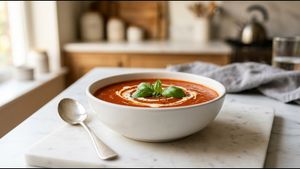 Comfort Style Creamy Blend Tomato Soup Recipe
 -
 Rashmika Mandanna’s “Now It’s Us Three” Post Sparks Speculation Ahead of Anime Awards 2026 Return
 -
 The Softest Ever Homemade Gulab Jamun Recipe
 -
 Where To Eat This Easter 2026: From Chef-Led Experiences To Traditional Feasts Across India
 -
 International Carrot Day 2026: The Hydrating, Skin-Loving Vegetable To Eat More This Summer
 -
 Fluffy Jeera Rice Every Time: The Simple Trick You Need To Know
 -
 Parveen Babi 72nd Birth Anniversary: When A Modern, Unapologetic Style Icon Took Over Bollywood
 -
 5.8 Magnitude Earthquake In Afghanistan Sends Tremors To Delhi: Why Deep Quakes Travel Across Borders


DIY Skincare Ingredients: How To Safely Use Them

Increasingly, people are turning to their kitchen cabinets for traditional remedies. But not all natural products are good for your skin-just because they're natural doesn't mean they're safe.
DIY skincare is everywhere, but how good or beneficial are these ingredients?

Dermatologists often advise not to use DIY treatments to treat skin conditions because they've seen cases where DIY treatments have been used incorrectly - like toothpaste for pimples, sugar as a scrub, etc.
Some beauty ingredients are great, but a lot of kitchen staples and DIY skincare ingredients are really harsh on your hair and skin.
How To Use Diy Skincare Ingredients Safely
DIY skincare has become a recipe for disaster due to the use of unstable ingredients, layering and combining the wrong ingredients together.
Because the skin is the largest organ in the body, contents applied to its surface are absorbed by the body. Therefore, be sure to select ingredients that are both safe and effective.
1. Fruits, vegetables and herbs
Fresh fruits, herbs, and vegetables are among dermatologists' recommended ingredients for your DIY list. Fruits with high antioxidant properties, such as oranges, plums, guavas, amlas, and papayas, are generally safe to use. You may add them to your face mask or smash them and apply them [1].
Fresh herbs such as thyme, neem, parsley, and rosemary are actually helpful in soothing and healing the skin.
Once fresh herbs develop dark spots or begin to dry up, it is best not to use them on the face.

2. Essential oils
Although essential oils have proven to be a popular DIY ingredient, experts caution that they must be applied cautiously [2].
You should never apply essential oils undiluted to the skin. If you have sensitive skin, the ratios should be much higher than if you have normal skin.
As a DIY at home, essential oils should be used with great caution - or, just avoid them!
3. Carrier oils
Extracted from exotic seeds, nuts, beans, or kernels, carrier oils are full of vitamins, essential fatty acids, and vitamin E. They provide great hydration for your skin and hair. As this oil retains its beauty-loving properties, it is important to purchase an unrefined, cold-pressed one when choosing a carrier oil [3].
When used on acne-prone skin and in humid climates, carrier oils may clog pores.
4. Cocoa powder
Rich in antioxidants, cocoa powder can be used as a mask for dry skin, preventing free radical damage, preventing the early signs of ageing, and even brightening the complexion [4].
5. French clay
When it comes to facial masks, French clay - also known as green clay - is an excellent base, particularly if your skin is oily. It possesses a wide range of nutrients including magnesium, calcium, potassium, zinc, and manganese [5].
By deep cleansing your pores, removing impurities, exfoliating dead skin cells, treating blemishes, and soothing minor irritations, this product is beneficial for your skin.

6. Matcha tea powder
A great way to brighten dull skin is by using matcha tea powder. In addition to being rich in antioxidants and methylxanthines, matcha tea powder stimulates micro-circulation and improves the appearance of dull skin [6].
NOTE: Guys, remember to understand your skin type, to obtain verified information from medical experts, and to always test out the ingredients on your skin before applying them to your face.


 Continue with Google